Annona squamosa L.
Common Name
Sugar apple
Family
Araucariaceae
Origin & Distribution
Native to tropical America (likely the West Indies and Central America) but widely cultivated throughout the tropics, including West Africa. In Nigeria, it is commonly grown in home gardens, orchards, and botanical collections for its edible fruit.
Conservation Status
Least Concern

Description
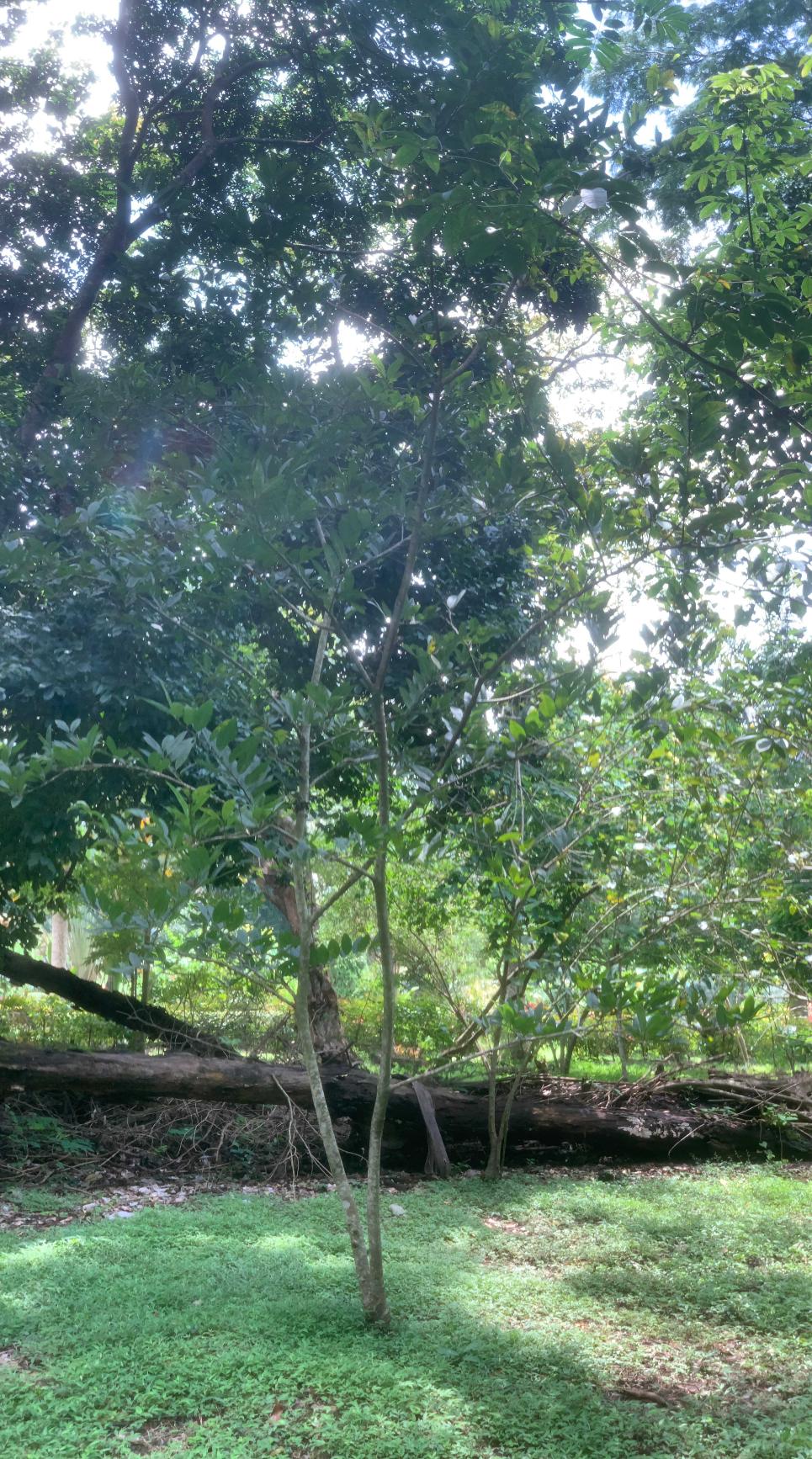
Small, semi-deciduous tree or shrub, 3–8 m tall, with irregular branching and open crown. Bark: Light brown, thin, and slightly fissured. Leaves: Simple, oblong to lanceolate, 6–12 cm long, bright green, with a slightly leathery texture. Flowers: Solitary or in small clusters, pendulous, with three greenish-yellow petals; slightly fragrant. Fruits: Round to heart-shaped compound berry, 6–10 cm in diameter; covered with distinct knobby segments (scales) that turn from green to light yellowish-green when ripe; pulp is sweet, creamy-white, and aromatic with many black seeds.
Ecological Information
Prefers full sunlight and well-drained soils; tolerates poor soils but benefits from organic matter. Drought-tolerant but thrives with moderate rainfall. Flowers are pollinated mainly by beetles and small insects.
Uses & Importance
Food: Edible fruit consumed fresh or processed into desserts, juices, and ice cream. Medicinal: Leaves, bark, and seeds used traditionally for treating diarrhoea, dysentery, and parasitic infections (seeds are toxic if ingested raw). Agroforestry: Suitable for mixed-crop systems and small-scale orchards. Aesthetic: Attractive small tree for gardens and parks due to its manageable size and delicious fruit.
Tree Photos
Quick Info
- Scientific Name
- Annona squamosa L.
- Family
- Araucariaceae
- Tree Code
- UI-BG-TS-035
- Conservation
- Least Concern