Ficus lutea Vahl
Common Name
Giant-leaved Fig
Family
Moraceae
Origin & Distribution
Native to tropical and subtropical Africa, from Senegal to Ethiopia and south to South Africa. Commonly found in coastal and inland forests, riverbanks, and open woodland. Cultivated as a shade and ornamental tree in parks, botanical gardens, and large compounds in Nigeria.
Conservation Status
Least Concern

Description
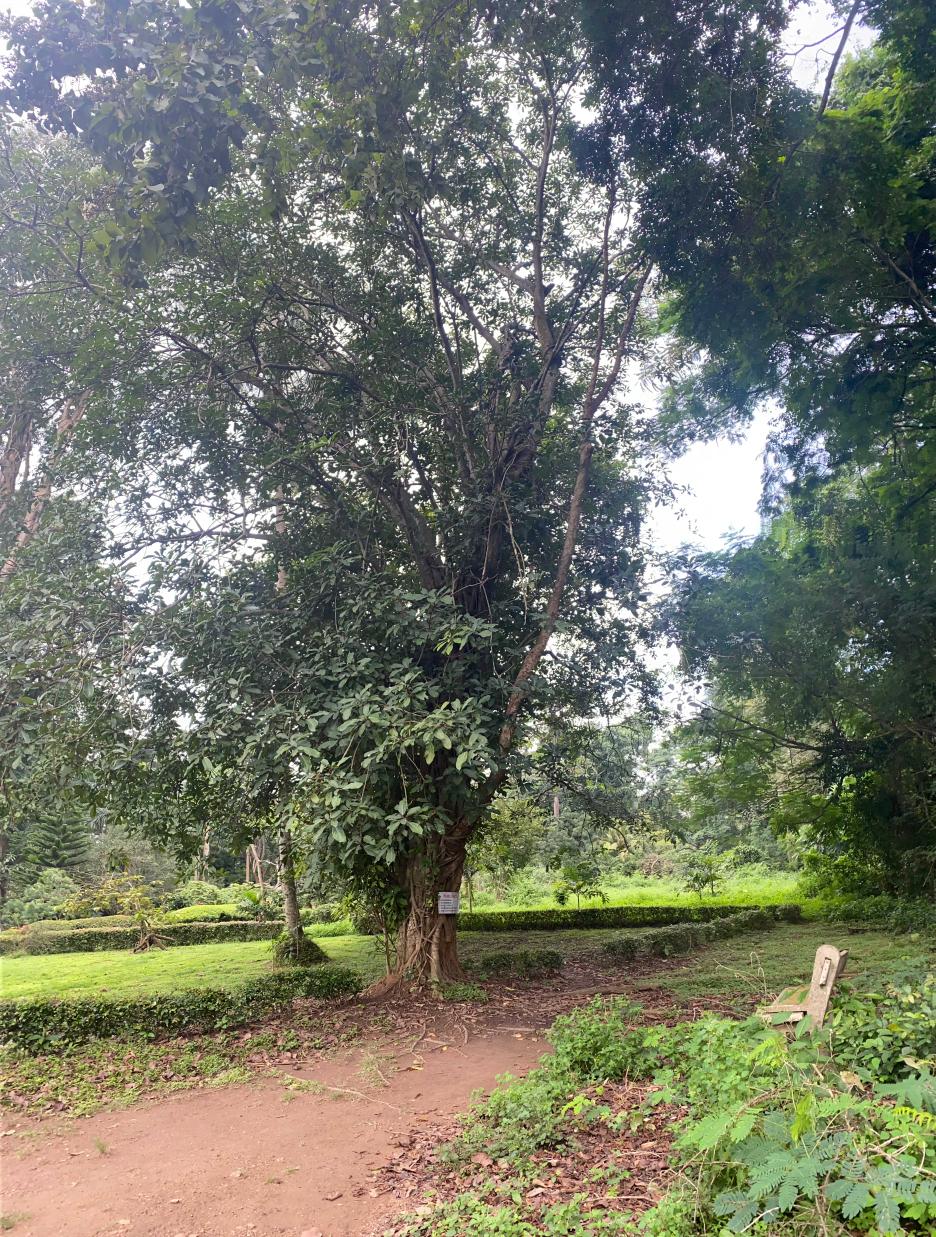
Large evergreen tree reaching 20–35 meters in height, with a wide, spreading crown. Trunk straight or buttressed at the base, bark smooth to slightly rough, light grey to brown. Leaves very large (up to 25–35 cm long), broadly ovate with entire margins, glossy green on the upper surface and paler beneath. Produces small, paired figs in leaf axils; figs are yellow to reddish when ripe, measuring 2–3 cm in diameter. Can produce aerial roots from branches, which may descend and root in the ground.
Ecological Information
Thrives in moist, well-drained soils but tolerates a range of soil types. Prefers full sun to partial shade. Acts as a keystone species in forest ecosystems by providing fruit year-round, which supports wildlife. Deep root system helps stabilize soil and prevent erosion.
Uses & Importance
Planted as a shade tree in parks, school grounds, and botanical gardens. Leaves and bark used in traditional medicine for treating wounds and digestive issues. Wood used locally for light construction, fuelwood, and making utensils. Fruits attract birds and small mammals, enhancing biodiversity.
Tree Photos

Quick Info
- Scientific Name
- Ficus lutea Vahl
- Family
- Moraceae
- Tree Code
- UI-BG-TS-007
- Conservation
- Least Concern