Bismarckia nobilis Hildebr. & Wendl.
Common Name
Bismarck Palm
Family
Coryphoideae
Origin & Distribution
Native to Madagascar, where it grows in open grasslands and savannah-like habitats. Now cultivated worldwide in tropical and subtropical regions as an ornamental palm, including in Nigeria's botanical gardens and landscapes.
Conservation Status
Least Concern

Description
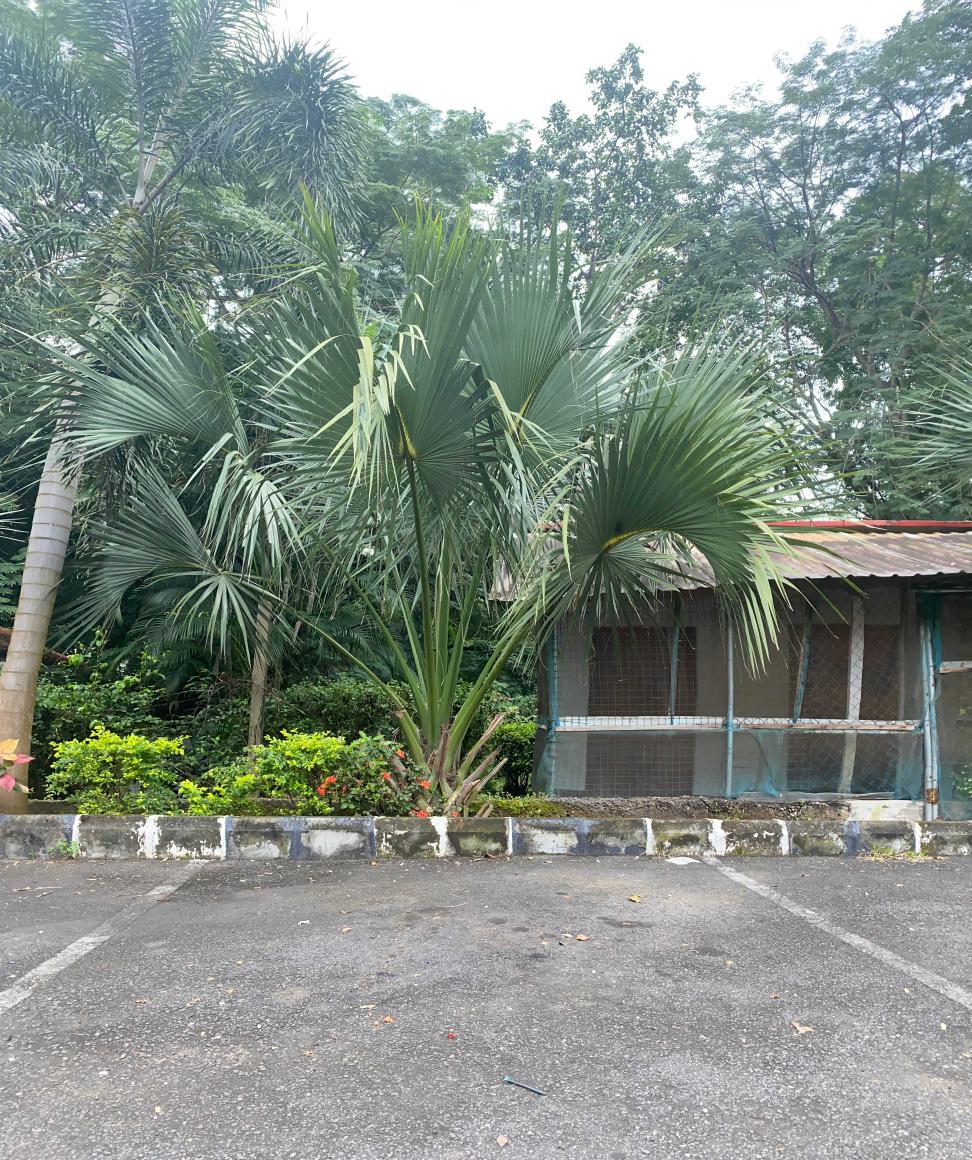
Medium to tall, solitary palm reaching 12–25 meters in height at maturity. Trunk straight, robust, and gray, typically ringed with old leaf scars. Leaves are massive, fan-shaped (costapalmate), up to 3 meters wide, with a striking silvery-blue or bluish-gray color. Petioles are sturdy with small teeth along the margins. Inflorescences emerge among the leaves, producing small, cream-colored flowers; species is dioecious (separate male and female trees). Fruits are round to oval, about 3–4 cm in diameter, turning brown to purple-black when mature.
Ecological Information
Prefers full sunlight and well-drained sandy or loamy soils. Tolerates drought once established but grows well with regular watering. Highly wind-resistant and adaptable to Nigeria's tropical climate. Flowering and fruiting periods vary but often occur during the dry season in cultivation.
Uses & Importance
Primarily grown for ornamental purposes due to its bold, architectural appearance and silver foliage. Acts as a focal point in gardens, avenues, and public spaces. In its native Madagascar, parts of the palm are used for thatching and local crafts. Fruits may be consumed by wildlife, aiding seed dispersal.
Tree Photos

Quick Info
- Scientific Name
- Bismarckia nobilis Hildebr. & Wendl.
- Family
- Coryphoideae
- Tree Code
- UI-BG-TS-004
- Conservation
- Least Concern